
New Zealand's prime minister says Cyclone Gabrielle, which has pummelled much of the North Island, is a weather event not seen "in a generation".
Chris Hipkins' government has declared a state of emergency - only the third in New Zealand's history.
About a third of the country's population of five million people live in affected areas.
Many people are displaced and some were forced to swim from their homes to safety after rivers burst their banks.
Others have been rescued from rooftops.
About a quarter of a million people are without power. Falling trees have smashed houses, and landslides have carried others away and blocked roads.
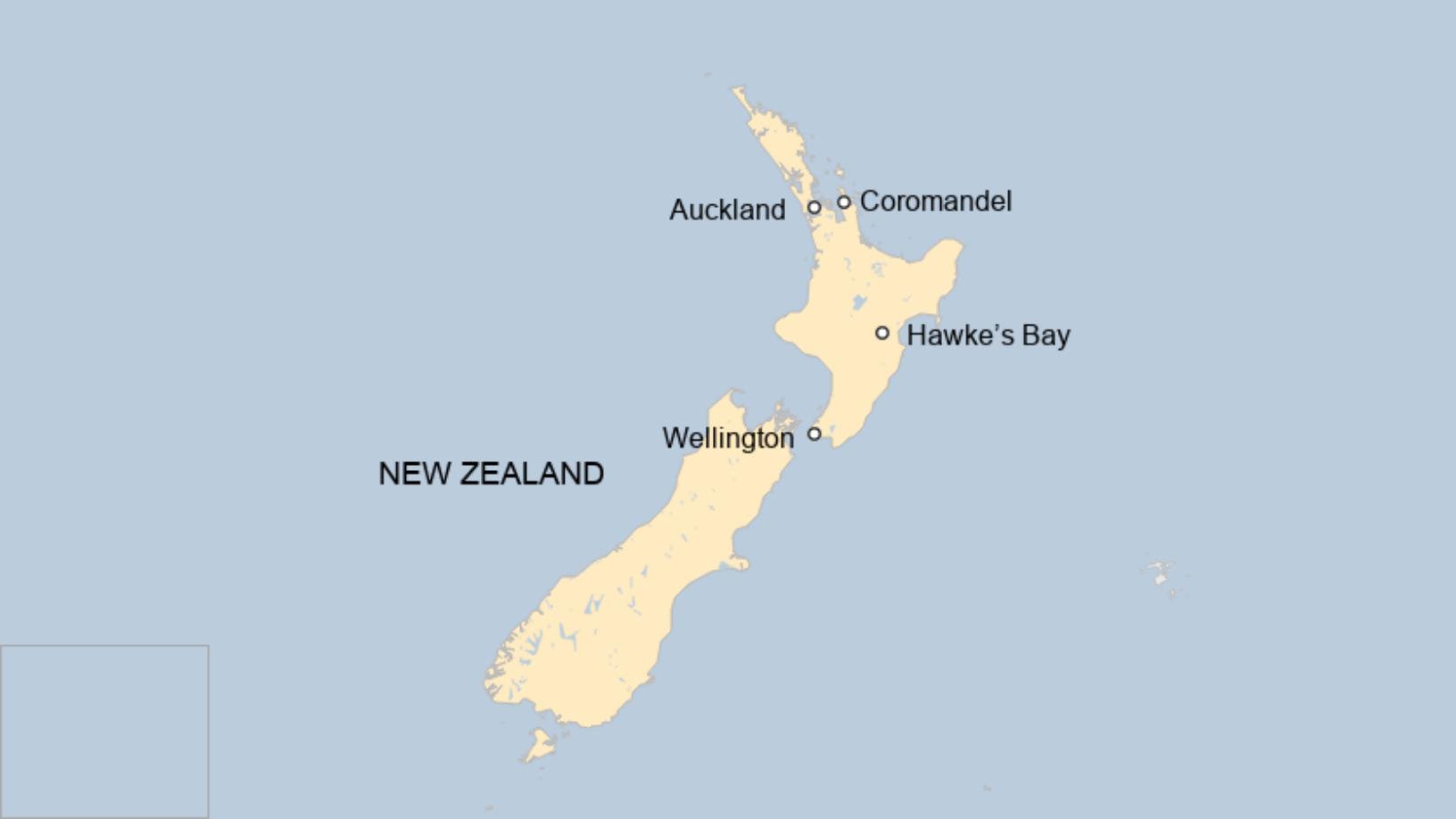
The storm's damage has been most extensive in coastal communities on the far north and east coast of the North Island - with areas like Hawke's Bay, Coromandel and Northland among the worst hit.
Communications to one town in the region have been completely cut after a river burst its banks.
Civil defence authorities in Hawke's Bay said they couldn't cope with the scale of the damage. Australia and the UK have pledged to help.
A firefighter remains missing after being caught in a landslide in Muriwai, west of Auckland. A second firefighter involved was critically injured, rescue agencies said.
Marcelle Smith, whose family lives in a cliff-front property in Parua Bay on the east coast of the North Island, told the BBC she had fled inland with her two young children on Monday night.
Her husband remained behind to set up protections for their home. Some embankments set up had already been washed away and they were still battling wild weather on Tuesday.
The distressed sailor's yacht was pushed out onto choppy waters due to the cyclone winds, and due to the extreme weather he could not be airlifted to safety.
Instead the man, who wearing a life jacket, left the yacht and was pulled out of the sea by two Navy divers on board the defence force's Rigid Inflatable Hull (RHIB) sea boat.
Earlier, a state of emergency was declared in the country after Cyclone Gabrielle - described as the nation's most severe weather event in years - swept through the north of the country. This is the third time a state of emergency has been declared in New Zealand.
It comes just two weeks after the country's largest city, Auckland, was swamped by a record-breaking storm that killed four people.
Overnight, a volunteer firefighter was reported missing, after being caught in a landslide near Auckland, says New Zealand fire service.
One firefighter was rescued early this morning and is in a critical condition.
The search for the second firefighter was suspended as it was too dangerous to continue.
Heavy rainfall overnight caused 2,500 people to evacuate and brought widespread flooding.
Roads were also closed, including the main route between Auckland and the capital Wellington.
Weather conditions eased on Tuesday as the storm moved away from New Zealand.
But 225,000 homes and businesses remained without power and people were continuing to be evacuated, emergency services reported.
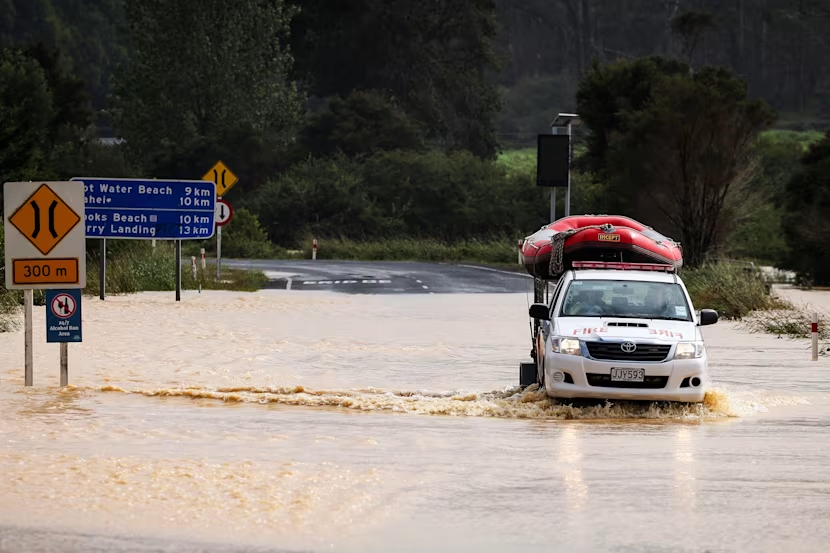
New Zealand is situated in a region that is prone to cyclones, particularly during the summer months between December and March. The country has experienced several cyclones over the years, some of which have caused significant damage to infrastructure and posed a risk to public safety. Here are some of the notable cyclones that have impacted New Zealand in the past:
Cyclone Giselle (1968) - This was one of the most deadly cyclones to hit New Zealand, claiming the lives of 51 people, including 37 crew members of the ferry Wahine. The cyclone caused widespread damage to infrastructure and homes, particularly in the Wellington region.
Cyclone Bola (1988) - This cyclone caused extensive damage to the East Coast of the North Island, with many communities left isolated due to flooding and landslides. The cyclone caused 3 fatalities and significant damage to infrastructure, including roads and bridges.
Cyclone Drena (1993) - This cyclone caused widespread flooding and landslides in the North Island, particularly in the Coromandel region. The cyclone caused 2 fatalities and significant damage to infrastructure.
Cyclone Fergus (1996) - This cyclone caused flooding and landslides in the North Island, particularly in the Bay of Plenty region. The cyclone caused 3 fatalities and significant damage to infrastructure, including roads and bridges.
Cyclone Gita (2018) - This was one of the most significant cyclones to hit New Zealand in recent years, causing extensive damage to the South Island. The cyclone caused flooding and landslides, with several regions declared a state of emergency. The cyclone caused significant damage to infrastructure, including roads, bridges, and buildings.
Cyclone Cook (2017) - This cyclone caused flooding and landslides in the North Island, particularly in the Bay of Plenty and Coromandel regions. The cyclone caused one fatality and significant damage to infrastructure, including roads and bridges.
Cyclone Ita (2014) - This cyclone caused flooding and landslides in the North Island, particularly in the Auckland and Northland regions. The cyclone caused significant damage to infrastructure, including roads and bridges.
It is worth noting that New Zealand has a comprehensive framework for managing natural hazards, including cyclones. The government provides advice to the public on how to prepare for and respond to extreme weather events, and various agencies work together to coordinate response efforts. While cyclones can pose a risk to public safety and cause significant damage to infrastructure, the country is well-prepared to manage the risks associated with these events.
Certainly, here are some additional points of information regarding cyclones in New Zealand:
Tropical Cyclones vs. Extratropical Cyclones - New Zealand experiences both tropical cyclones and extratropical cyclones. Tropical cyclones, also known as hurricanes or typhoons in other parts of the world, form in the tropics and can be highly destructive, while extratropical cyclones form in the mid-latitudes and can bring strong winds and heavy rain to New Zealand.
Climate Change and Cyclones - There is evidence to suggest that climate change may increase the intensity and frequency of cyclones in New Zealand, as warmer ocean temperatures can fuel the formation of tropical cyclones. This could have significant implications for public safety and infrastructure in the country.
Preparedness and Response - New Zealand has a well-developed framework for managing the risks associated with cyclones. This includes early warning systems, emergency response plans, and risk assessment and management strategies. The government also provides advice to the public on how to prepare for and respond to extreme weather events, such as by creating emergency kits and having a family plan.
Economic Impact - Cyclones can have significant economic impacts, particularly in industries such as agriculture and tourism. Damage to infrastructure can result in significant repair costs, while disruptions to supply chains and tourism can have long-lasting economic effects.
Future Outlook - As New Zealand continues to experience the effects of climate change, the risk of cyclones is likely to increase. This underscores the importance of ongoing efforts to manage and mitigate the risks associated with these extreme weather events.


0 Comments